Which one do you prefer, shopping online or purchasing in a local store
By Nukkad Mall · 8/11/2026
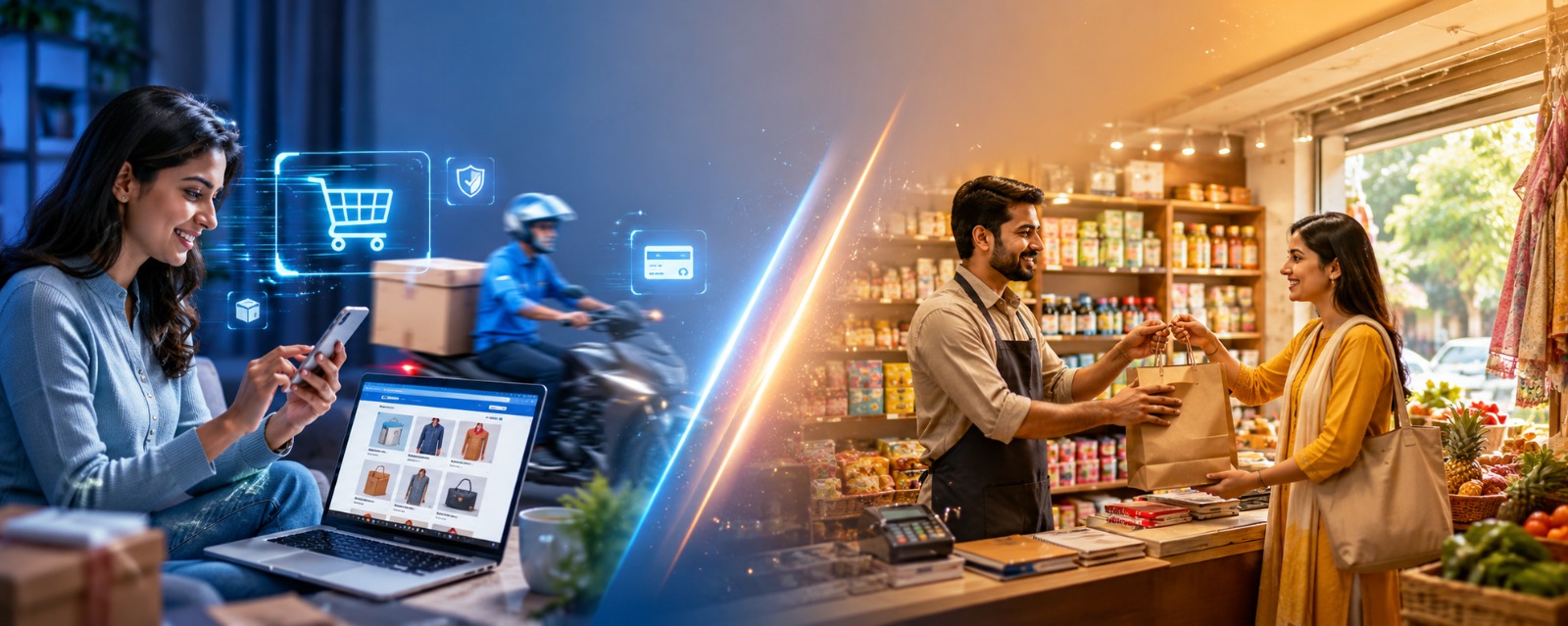
Shopping has dramatically transformed over the past few years, especially in bustling cities like Noida, Uttar Pradesh. The digital age has introduced a paradigm shift in how we approach retail therapy. From the comfort and convenience of online shopping to the tactile allure of local stores, each has its merits that cater differently to our ever-evolving lifestyles. As you ponder where to spend your hard-earned money, consider which option truly aligns with your personal preferences and lifestyle needs. Is the digital convenience of online shopping truly superior, or does the charm of in-store purchases still hold its ground?
Key takeaways
- Online shopping offers unparalleled convenience and a vast selection of products
- Local stores deliver a sensory and personalised shopping experience
- Price comparison tools online help consumers find the best deals, while in-store promotions provide unique savings opportunities
- The rise of e-commerce in Noida significantly impacts local businesses, consumer habits, and the retail landscape
- Personal preferences, lifestyle, and security concerns play a vital role in choosing between online and in-store shopping
The Rise of Online Shopping: A Convenient Revolution
Online shopping platforms have taken the retail industry by storm, offering a level of convenience and accessibility that traditional stores struggle to match. The appeal of browsing through an endless array of products at any time of the day (or night) cannot be overstated. With just a few clicks, you can explore a world of options from the comfort of your own home.
E-commerce websites have revolutionised the way we shop by providing seamless and secure transactions. From groceries to gadgets, these digital marketplaces have it all. You can easily compare prices and products across different online retailers without breaking a sweat. Not to mention, the user-friendly interfaces and mobile apps have made it even easier to shop on the go, catering to the fast-paced lives we lead today.
One of the standout features of online shopping is the logistics prowess of retail giants. They invest heavily in ensuring timely deliveries, often offering next-day or even same-day services. In a bustling city like Noida, where traffic can be a nightmare, the convenience of having your purchases delivered to your doorstep is a game-changer. This efficiency not only saves time but also reduces the stress associated with traditional shopping trips.
Moreover, online shopping platforms provide a plethora of customer reviews and ratings, offering valuable insights that help you make informed decisions. This transparency is a boon for cautious shoppers who want to ensure they're getting the best bang for their buck. The ability to read about others' experiences with a product before making a purchase is a luxury that physical stores often don't provide.
In summary, online shopping has ushered in a new era of consumerism, emphasising convenience, variety, and efficiency. Its influence is undeniable, but does it completely overshadow the allure of store shopping? Let's delve into the world of physical stores to uncover what they bring to the table.
Store Shopping: A Traditional Experience with Modern Twists
Walking into a local store, you're greeted by a sensory experience that online shopping simply can't replicate. The tactile pleasure of feeling fabrics, the vibrant colours on display, and the subtle scent of new products all contribute to an experience that is both immersive and satisfying. In Noida, physical stores continue to hold their charm, providing a shopping journey that is as much about the experience as it is about the purchase.
Brick-and-mortar shops have adapted to the digital age by incorporating modern technologies. Self-checkout kiosks and digital payment options have streamlined the shopping process, making it quicker and more efficient. Despite these advancements, the essence of in-person shopping remains unchanged. It's about the joy of discovering new products, trying them on, and receiving personalised customer service.
For many, shopping is a social activity. Visiting stores with friends or family can turn a mundane task into a memorable outing. The social aspect of store shopping fosters connections and creates shared experiences that online shopping can't quite match. In Noida, where community ties are strong, this aspect is particularly appealing.
Local retailers often excel in providing bespoke customer service. The personal touch and expert advice offered by knowledgeable staff can enhance your shopping experience, ensuring you find exactly what you're looking for. This level of personalisation is something online platforms, despite their algorithms, struggle to achieve.
In conclusion, while online shopping offers convenience, store shopping provides an experience rich in sensory delight and personal interaction. The choice between the two ultimately depends on what you value more in your shopping journey.
Advantages of Online Shopping: Comfort and Variety at Your Fingertips
One of the most compelling advantages of online shopping is its ability to save you from the hustle and bustle of crowded stores and endless queues. Imagine skipping the long lines and diving straight into a world of endless options. Whether it's fashion, electronics, or groceries, the sheer variety available online often dwarfs what's on offer at local stores.
E-commerce platforms provide access to a plethora of different retailers, allowing you to explore diverse brands and products with ease. This extensive selection means you're more likely to find exactly what you're looking for, often at better prices than in physical stores. The competitive nature of online retail translates into frequent offers, discounts, and deals, ensuring you get the best value for your money.
User reviews and ratings are another major perk of online shopping. They offer a transparent glimpse into the experiences of other customers, helping you make informed decisions. This feature empowers you to choose products that meet your expectations and avoid potential pitfalls.
The convenience of home delivery is a game-changer, especially for those living in bustling cities like Noida. No more lugging heavy bags or struggling with public transport; your purchases arrive right at your doorstep. This service is particularly valuable for busy professionals and families juggling multiple responsibilities.
In essence, the advantages of online shopping lie in its ability to offer comfort, variety, and value, all at your fingertips. But does this convenience outweigh the benefits of store shopping? Let's explore.
Benefits of Store Shopping: Personal Interaction and Immediate Gratification
Physical stores offer immediate gratification that online shopping simply cannot compete with. The ability to walk in, purchase, and use a product immediately is a significant advantage. There's no waiting for delivery, no wondering if the item will meet your expectations; you see it, you like it, you buy it.
In-store shopping provides the opportunity for direct interaction with knowledgeable staff. This personal service can be invaluable, especially when you're unsure about a product. Staff can offer advice, recommendations, and insights that enrich your shopping experience and help you make better choices.
Supporting local businesses is another benefit of in-store shopping. By purchasing from local retailers, you contribute to the local economy and help sustain the vibrant community of Noida. This support fosters relationships and strengthens community ties, creating a sense of belonging and mutual growth.
The sensory experience of shopping in a physical store enhances product appeal. You can see, feel, and try items before buying, eliminating uncertainties associated with fit, colour, and quality. This tangible interaction with products can lead to more satisfying purchases.
In conclusion, while online shopping offers convenience, store shopping provides personal interaction, immediate satisfaction, and community support. Both have their unique appeal, but which aligns more closely with your values and lifestyle?
Ecommerce Growth: How It’s Shaping Consumer Habits in Noida
The rapid growth of e-commerce has significantly influenced consumer habits in Noida. The city's residents have embraced digital purchases, transforming the local retail landscape. With the convenience of 24/7 online accessibility, consumers can shop at their leisure, a feature that traditional stores struggle to offer.
The boom in online shopping has led to the rise of local delivery services in Noida, enhancing the shopping experience for its tech-savvy residents. These services cater to the needs of busy professionals who appreciate the convenience of having goods delivered directly to their doorstep.
Local e-commerce platforms have adapted to Noida's unique preferences by offering region-specific products. This tailored approach ensures that consumers find what they need, reflecting the diverse tastes and requirements of Noida's population.
Young professionals in Noida, in particular, favour online shopping due to their hectic schedules. With demanding work commitments, the flexibility and ease of online shopping provide a much-needed respite. This trend indicates a shift in consumer habits that prioritise convenience and efficiency.
In summary, the growth of e-commerce in Noida has reshaped consumer habits, driving a shift towards digital purchases. The impact on local businesses and the retail landscape is profound, prompting an evolution in shopping preferences and behaviours.
Online vs Store: Price Comparisons and Savings Opportunities
When it comes to pricing, online platforms often have the upper hand. The absence of physical overheads allows them to offer competitive pricing and attractive discounts. Price comparison tools further empower you to find the best deals effortlessly, ensuring you get the most bang for your buck.
However, local stores have their own set of savings opportunities. Exclusive in-store discounts, seasonal sales, and loyalty rewards can offer significant savings. These promotions provide a unique incentive to visit physical stores and support local retailers.
In-store promotions often include bundled deals, where purchasing multiple items together results in a discount. This strategy not only enhances value but also encourages consumers to explore a wider range of products.
One advantage of shopping in physical stores is the ability to negotiate prices directly with store representatives. This personal interaction can lead to additional savings and deals that are unavailable online, adding a human touch to the shopping experience.
In conclusion, both online and in-store shopping offer unique price advantages. Your choice depends on whether you prefer the convenience of online price comparisons or the personal interaction and exclusive deals of physical stores.
Navigating Returns and Refunds: Online Shopping vs Store Shopping
Returns and refunds are an integral part of the shopping experience, and each method offers its own set of advantages. Online returns processes, while convenient, can often be time-consuming. You must wait for the item to be shipped back and processed before receiving a refund, which can be a lengthy ordeal.
In contrast, physical stores allow for immediate returns and exchanges with minimal hassle. You can simply walk in, present your receipt, and resolve the issue on the spot. This immediate resolution provides peace of mind and enhances customer satisfaction.
Many online retailers strive to improve their return policies by providing clear guidelines and hassle-free processes. This commitment to customer service ensures that online shoppers feel confident in their purchasing decisions, knowing they have options if things don't work out.
In-store refunds typically happen on-the-spot, offering instant resolution. This immediacy is a major advantage, especially for those who value quick and efficient problem-solving.
In conclusion, while online returns offer convenience, in-store returns provide immediacy and face-to-face communication. Your preference will depend on how much you value convenience versus instant resolution.
Impact of Shopping Habits on Local Businesses in Noida
The rise of online shopping has posed challenges for traditional businesses in Noida. As consumer preferences shift towards digital purchases, local shops must adapt to stay relevant. Many have enhanced their digital presence and begun offering online services to meet changing demands.
This shift in shopping habits affects employment trends in the retail sector. As more consumers opt for online shopping, the demand for in-store staff decreases, prompting businesses to re-evaluate their workforce needs.
Collaborative efforts between local retailers and e-commerce platforms are on the rise. By joining forces, they can offer a hybrid shopping experience that combines the best of both worlds. This collaboration strengthens their competitive position and ensures they remain relevant in the evolving market.
Noida's businesses focus on unique offerings to attract customers offline. By providing products and services that can't be found online, they create a niche for themselves and entice consumers back into physical stores.
In summary, the shopping habits of Noida's residents have a significant impact on local businesses. As they navigate the challenges of the digital age, businesses must innovate and adapt to meet the evolving needs of their customers.
Exploring Security Concerns: Online Transactions and In-Store Purchases
Security is a top priority for consumers, whether shopping online or in-store. Online transactions require secure payment methods to protect your data. E-commerce sites implement encryption technologies to safeguard information, but the risk of fraud remains a concern.
In-store purchases offer the option of cash payments, reducing digital security risks. This traditional method of payment provides peace of mind for those wary of sharing their financial details online.
Both online and physical retail environments present risks of fraud. Shoppers must remain vigilant and educate themselves on safe shopping practices to protect their personal information and finances.
Consumer education on safe shopping practices is crucial for both methods. Understanding the risks and how to mitigate them empowers you to shop confidently, knowing you're taking steps to protect yourself.
In conclusion, security concerns are a significant consideration when choosing between online and in-store shopping. Your choice will depend on your comfort level with digital transactions and your commitment to safe shopping practices.
Personal Preferences: How Lifestyle Influences Shopping Choices
Your lifestyle plays a pivotal role in determining your shopping preferences. Individuals with busy schedules often prefer the convenience of online shopping, which allows them to shop whenever and wherever they choose.
Social shoppers, on the other hand, enjoy the interaction and experience of visiting local stores. The opportunity to connect with others and engage in shared activities adds value to their shopping journey.
Eco-conscious consumers may favour local shopping to reduce their carbon footprint. By supporting local businesses and minimising transportation emissions, they align their shopping habits with their environmental values.
Tech-savvy individuals embrace the digital nature of online shopping. They appreciate the ease of navigating e-commerce platforms and the ability to access a world of products at their fingertips.
In summary, personal values and lifestyle priorities significantly impact your shopping decisions. Whether you prioritise convenience, social interaction, or environmental considerations, your choices reflect your unique preferences and needs.
Conclusion
In the grand scheme of shopping, both online and in-store experiences offer unique advantages and challenges. Online shopping provides unparalleled convenience, a vast product range, and competitive pricing, while store shopping delivers a sensory experience, personalised service, and immediate gratification. Your choice ultimately depends on what you value most in your shopping journey. Do you prefer the digital convenience of online shopping, or does the allure of in-store purchases still capture your heart? Share your thoughts and let's continue the conversation on how our shopping choices shape our lives.
Frequently Asked Questions
1. Do you prefer online shopping or in-store shopping?
The choice between online shopping and in-store shopping ultimately comes down to what a person values most in their retail journey. Online shopping wins on convenience — you can browse thousands of products, compare prices, and place an order from your couch at 2 AM if you want. It also opens up a much wider selection than any single physical store could stock. Store shopping, on the other hand, offers something online simply can't replicate: the ability to touch, feel, and try a product before buying it, plus the instant gratification of walking out with your purchase in hand. Many shoppers in cities like Noida actually blend both approaches — researching and comparing prices online, then heading to a local store for the final purchase, especially for items like clothing, groceries, or electronics where a hands-on check matters.
2. Why is local shopping better than online shopping?
Local shopping carries a set of benefits that go beyond just the transaction itself. When you buy from a nearby store, you're directly supporting the local economy and helping small business owners and their families sustain their livelihood. There's zero waiting time — no tracking numbers, no delivery windows, just immediate possession of what you bought. You also get to physically inspect quality, fit, and freshness (especially crucial for groceries and apparel), which drastically reduces the chances of disappointment or the hassle of a return. Local shopping also cuts out shipping costs and packaging waste, making it a more environmentally friendly choice. On top of that, the personalised service and product knowledge that local shopkeepers offer is something algorithms and chatbots still struggle to genuinely replicate.
3. Should you buy online or in-store?
This decision really depends on the specific situation you're in. If you need something urgently — say, milk, medicine, or a last-minute gift — in-store shopping is almost always the smarter route since you get the product immediately. If you're chasing the widest possible selection, the best price after comparison, or simply don't have time to step out, online shopping is the better fit. Product type matters too: things you need to try on or physically evaluate (furniture, clothing, fresh produce) are safer bets in-store, while standardised items (electronics with known specs, books, household staples) are usually just as safe to buy online. Many experienced shoppers use a hybrid strategy — researching and reading reviews online, then either ordering online or visiting the nearest store depending on urgency and price at that moment.
4. What do you prefer, online shopping or offline shopping?
There's no universally "correct" answer here — it's genuinely subjective and shaped by lifestyle, priorities, and even personality. Someone with a packed work schedule and little free time will naturally lean towards online shopping because it saves hours that would otherwise go into commuting, parking, and standing in queues. A person who enjoys the social ritual of browsing stores with friends or family, or who simply likes discovering products by touch and sight, will gravitate towards offline shopping. Budget-conscious shoppers often prefer online platforms for the ease of price comparison, while those who value community connection and immediate support from real people tend to stick with their neighbourhood stores. Most people today don't pick one exclusively — they move fluidly between both depending on what they're buying.
5. Is online shopping actually cheaper than shopping at physical stores in Noida?
Not always, though it can appear that way at first glance. Online platforms often have lower operating costs — no rent for a storefront, no in-person staff for every customer — which lets them offer discounts, bundled deals, and frequent sales. Price comparison tools also make it effortless to hunt down the lowest price across multiple sellers in seconds. However, once you factor in delivery charges, potential restocking or return fees, and the temptation to over-order because everything looks convenient, the final cost can quietly climb. Local stores in Noida often counter this with their own seasonal discounts, loyalty programmes, and the ability to negotiate prices directly with the shopkeeper — something no online checkout page allows. So the "cheaper" option really depends on the product category and how disciplined a shopper is with each method.
6. How has e-commerce growth affected local businesses in Noida?
The rapid rise of e-commerce has pushed local businesses in Noida to rethink how they operate. Many traditional shopkeepers have had to build a digital presence — from simple WhatsApp catalogues to full online storefronts — just to stay visible to a generation that increasingly starts its shopping journey on a screen. This shift has also affected hiring patterns, with some stores needing fewer in-person sales staff as footfall declines for certain product categories. At the same time, it's sparked genuine innovation: several local retailers now offer hybrid models, blending in-store visits with online ordering and doorstep delivery, essentially borrowing the best parts of e-commerce while keeping their community relationships intact. Businesses that lean into unique, in-person experiences — things you simply can't get from an app — are the ones finding it easiest to hold their ground.
7. Which is safer: online transactions or in-store purchases?
Both methods carry their own security considerations, so "safer" depends on what kind of risk you're most concerned about. Online transactions rely on encrypted payment gateways and secure servers, which are generally robust, but they do carry the risk of data breaches, phishing attempts, or fraudulent websites if you're not careful about where you shop. In-store purchases, especially when paid in cash, sidestep digital security risks entirely, though card and UPI payments in stores carry similar (if smaller-scale) risks as online transactions. The safest approach for either method is the same: use trusted platforms or well-known stores, avoid oversharing personal financial details, keep an eye on your bank statements, and stay alert to anything that feels off, whether that's a suspicious link online or a sketchy payment terminal in a shop.
8. How do returns and refunds differ between online and store shopping?
This is one of the more noticeable differences between the two shopping methods. With online shopping, returning an item usually means packaging it back up, arranging a pickup or drop-off, and then waiting — sometimes several days to a couple of weeks — for the refund to actually reflect in your account. It's convenient in that you don't have to leave your house, but the process can feel drawn out. In-store shopping, by contrast, allows for near-instant resolution: you walk in with the item and receipt, explain the issue, and typically walk out with either a replacement or a refund the same day. This face-to-face resolution also tends to feel more reassuring for shoppers who want a real person to address their concern immediately, rather than navigating a return portal or waiting on customer support emails.
9. Can online shopping and store shopping coexist for a hybrid experience?
Absolutely, and in fact this hybrid approach is becoming the norm rather than the exception. Many shoppers now use online platforms purely for research — reading reviews, comparing prices, and shortlisting options — before making the actual purchase in-store where they can verify quality firsthand. Others do the reverse: they visit a physical store to check a product's look and feel, then order it online later at a better price. Retailers themselves are leaning into this behaviour, with local stores building their own online ordering systems and e-commerce platforms opening physical pickup points or experience stores. This blended model gives shoppers the best of both worlds: the convenience and price transparency of online shopping combined with the trust and immediacy of in-store interaction.
10. What factors should influence your choice between online and in-store shopping?
A number of practical factors can help you decide the smarter option each time you shop. Urgency matters most when you need something the same day — for medicines, forgotten groceries, or a last-minute gift, in-store shopping is almost always the better call, while online shopping suits purchases you can comfortably wait a few days for. The type of product matters too: items like clothing, furniture, and fresh produce genuinely benefit from being seen and touched before buying, whereas electronics with fixed specifications, books, or repeat-purchase household items are usually just as safe to order online. Your budget priorities play a role as well — if price comparison across sellers is your main concern, online tools make this almost effortless, but if you value negotiating directly or redeeming loyalty discounts, local stores tend to have the edge. How much free time you have is another factor, since a packed schedule naturally pushes people towards online shopping, while free time can make browsing a physical store an enjoyable outing rather than a chore. Finally, personal values come into play — if supporting the local economy, cutting down your carbon footprint, or simply enjoying social interaction while shopping matters to you, in-store shopping is likely to feel more rewarding. Weighing these factors situation by situation, rather than locking into one method permanently, tends to give shoppers the best overall experience.